Asset Lifecycle
The asset lifecycle begins at financial close (Day 1), where energy infrastructure is onboarded into the Circular Asset Ledger to issue an immutable Digital Material Passport. This initial registration captures accurate, mass-based bill-of-materials data – logging component chemistry, structural specifications, and design-for-deconstruction protocols prior to commissioning. Throughout the asset's 20- to 50-year operational life, the owner pays recurring SaaS compliance subscriptions for continuous structural health tracking and regulatory reporting. Concurrently, micro-allocations from operational energy revenue flow directly into a legally ring-fenced escrow account, continuously building the dedicated capital required for eventual site restoration.
At the end of life or repowering trigger, the accumulated escrow funds are released to execute guaranteed full-depth site remediation, granting asset owners and host communities complete discharge from decommissioning liabilities. CEI then takes legal title to the decommissioned physical assets, activating pre-negotiated off-take routes established decades prior. Recovered materials – including mass structural concrete, scrap metals, solar components, and battery chemistry – are re-certified under neutral standards and reintegrated back into regional supply chains, converting traditional end-of-life environmental risks into valuable secondary material resources.
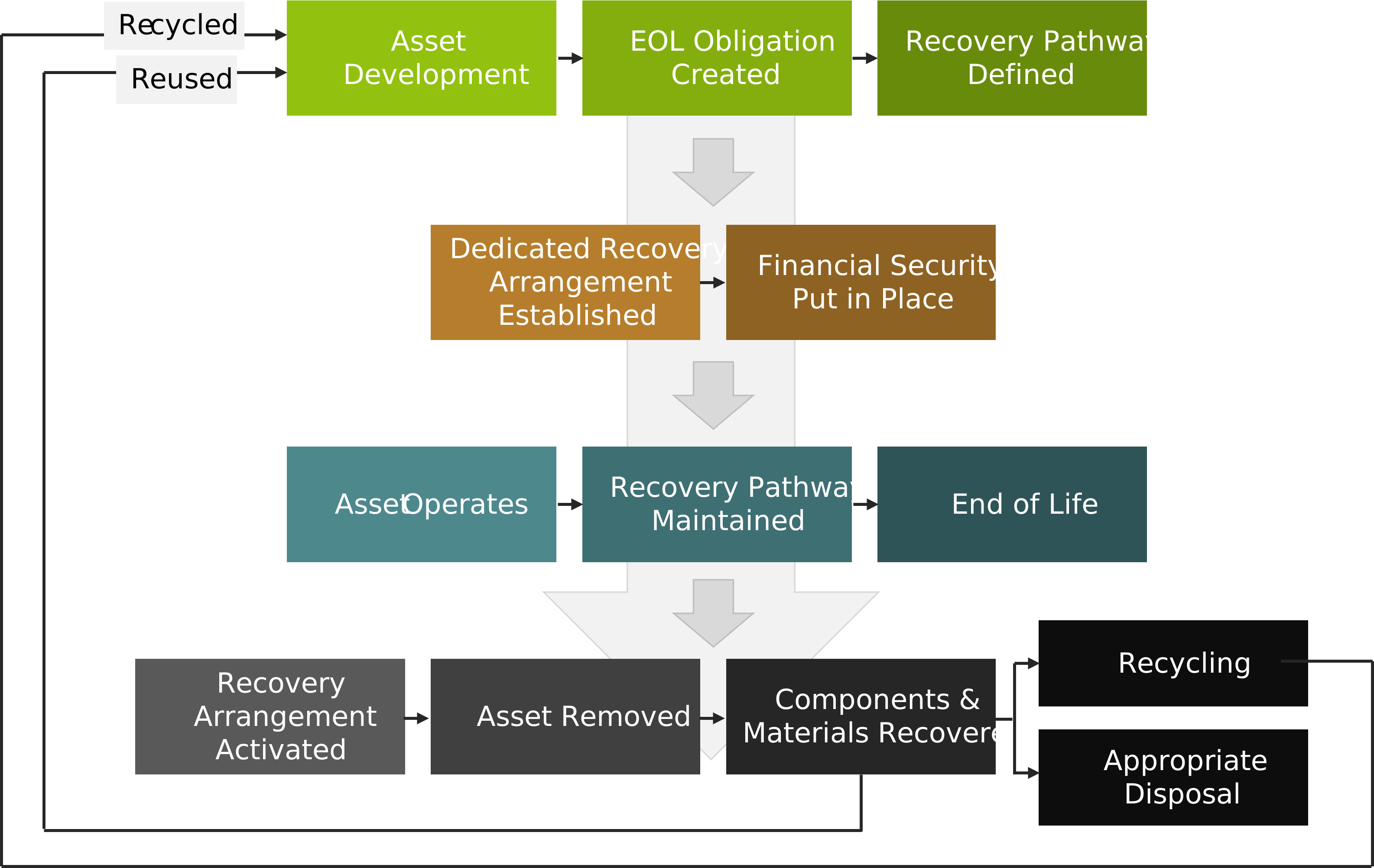
1. An Obligation Is Created
The development of an energy asset creates a future responsibility for its removal and appropriate end-of-life treatment.
CEI brings this obligation into the asset's lifecycle from the outset, establishing what will ultimately need to be removed, recovered, processed or restored. The objective is to give a future obligation a defined scope, rather than leaving it as an uncertain liability at the end of the asset's operating life.
2. The Recovery Pathway Is Defined
CEI translates the obligation into a practical recovery pathway.
This covers the assets and materials involved, removal methods, logistics, processing routes, expected costs, responsibilities and potential residual value. The result is a defined basis for determining how the asset will leave the site and how its components and materials can move into their next use.
3. A Dedicated Recovery Arrangement Is Established
The recovery pathway is established through a dedicated arrangement connected to the asset and its end-of-life obligation.
The arrangement is designed to remain executable throughout the asset's life and to provide continuity if the parties responsible for managing it change. This separates the long-term recovery obligation from dependence on any single operating entity.
4. The Obligation Is Financially Secured
Once the obligation and recovery pathway have been defined, the financial provision required to meet them can be established.
Depending on the project, jurisdiction and risk structure, this may involve reserves, trusts, bonds, guarantees, insurance or combinations of these mechanisms. The financial security is connected to the defined recovery obligation, providing a basis for funding the eventual work.
5. The Asset Operates
The asset enters its operating life with its end-of-life pathway already established.
CEI maintains the recovery pathway as relevant information changes, including asset condition, material composition, expected recovery costs, regulatory requirements and available recovery routes. This keeps the future obligation connected to the asset throughout its lifecycle.
6. End of Life Is Triggered
When an asset reaches the end of its useful life, is repowered or otherwise becomes subject to removal, the recovery arrangement is activated.
The financial provision and contractual arrangements established during the asset's life provide the basis for moving from operation to decommissioning and recovery.
7. The Asset Is Removed
The asset is dismantled and removed according to the established recovery pathway.
Components and materials are separated, transported and directed towards their designated recovery routes. Site restoration is carried out where required. CEI coordinates the process through the relevant execution parties, enabling the asset owner to fulfil the recovery obligation.
8. Materials and Components Enter Their Next Use
Removal is not the end of the lifecycle.
Where technically and economically viable, recovered components and materials can enter reuse, refurbishment, remanufacturing, recycling or other appropriate recovery routes. This creates a connection between the financial provision made for an asset's end of life and the physical recovery of the value embedded within that asset.